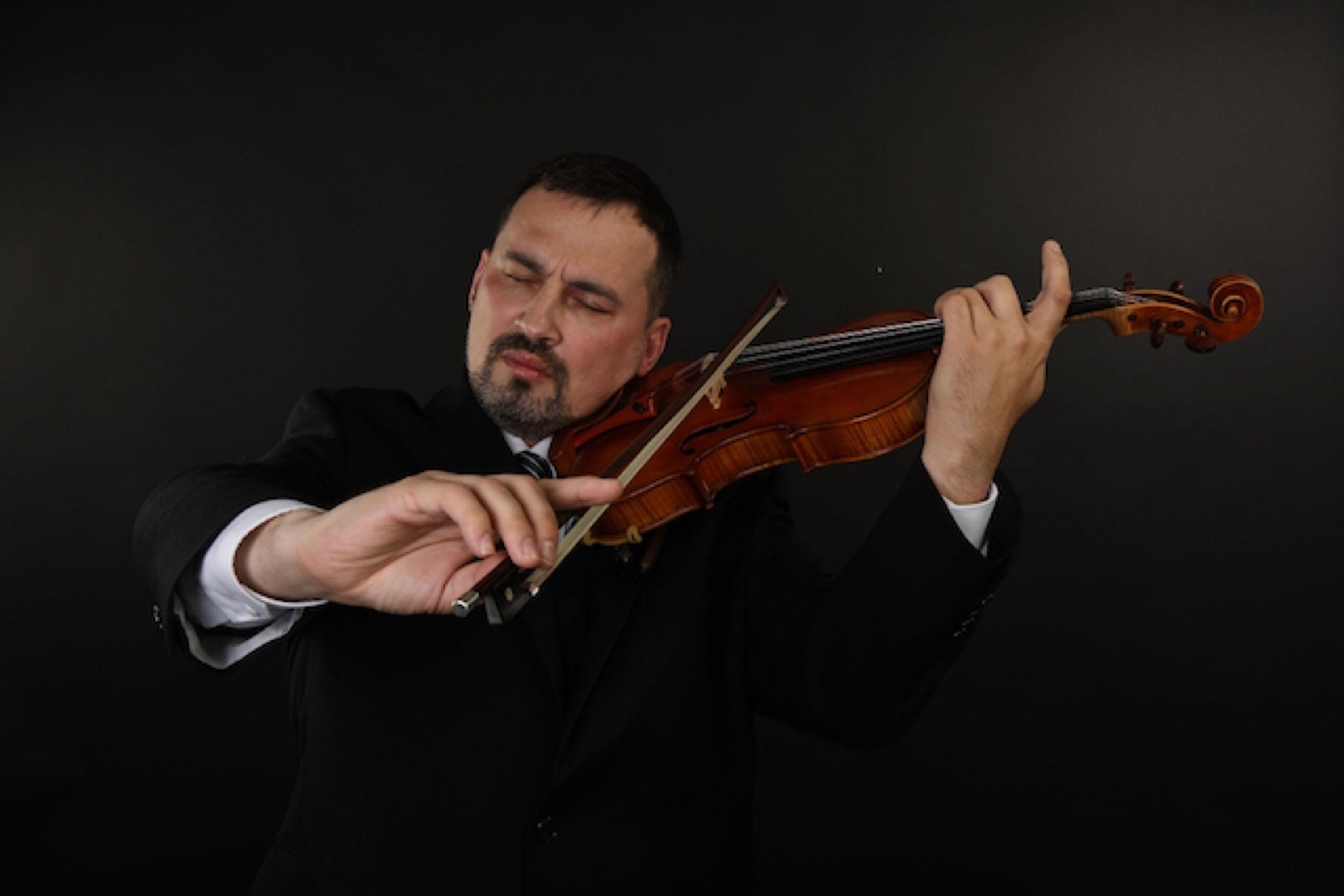
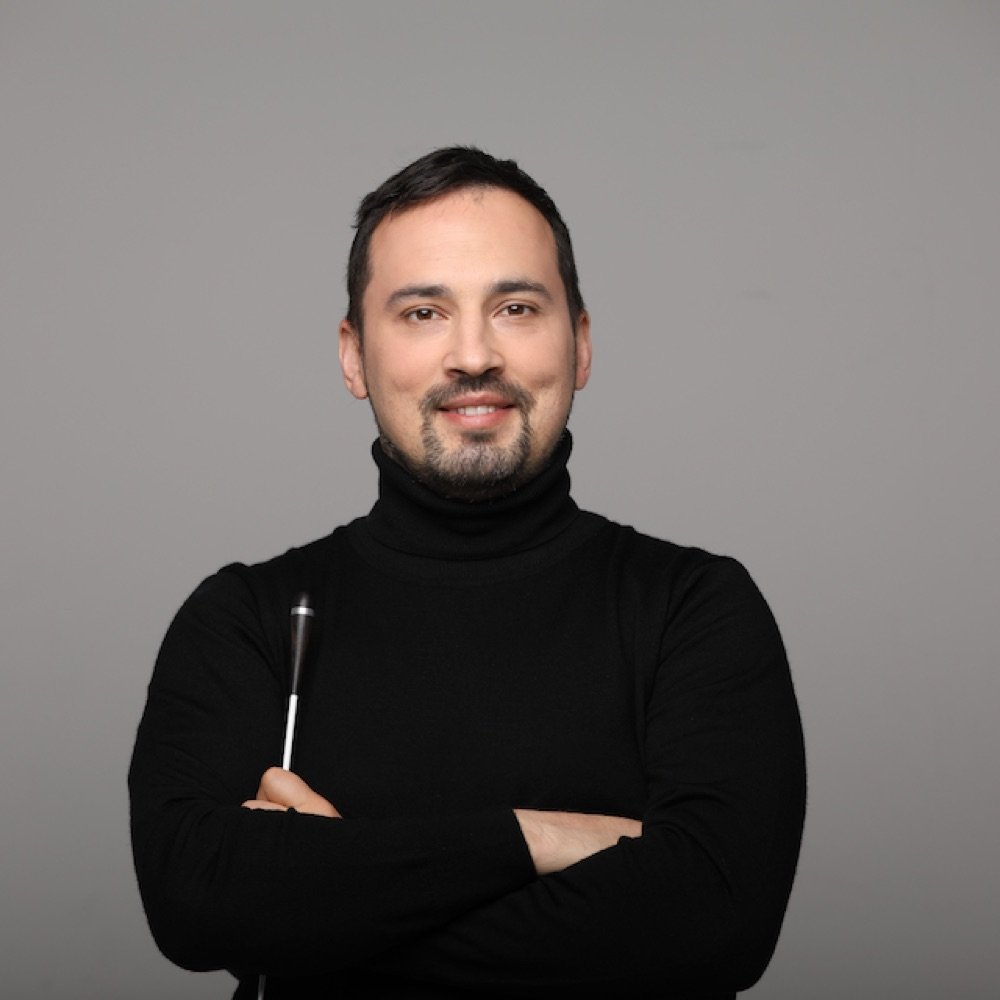
Every child brings a different combination of ability, imagination, temperament, and ambition. My role is to understand the individual student and create a path that helps them develop as fully as possible—musically, intellectually, and personally.
Violinist, conductor, and educator with more than 20 years of teaching experience in Odesa, Kyiv, Vienna, Shanghai, and the Greater Toronto Area. A small, carefully selected studio for families committed to meaningful, long-term musical development.
No obligation. We will discuss your child's goals, current level, and individual learning needs.
I earned my PhD in Musicology from the A. V. Nezhdanova Odesa National Academy of Music. My education is rooted in the distinguished Odesa violin tradition associated with Peter Stolyarsky and musicians including David Oistrakh, Nathan Milstein, Elizabeth Gilels, and Boris Goldstein.
My postgraduate violin studies included work with Bohodar Kotorovych at the Tchaikovsky National Music Academy of Ukraine in Kyiv and further study in Vienna with violinist and pedagogue Konstantin Weitz. I also studied conducting in Vienna with Christian Schulz.
My international teaching experience includes serving as a visiting professor at Shanghai Normal University and teaching in Vienna within the Young Masters Programme, a collaborative initiative of mdw – University of Music and Performing Arts Vienna and the Johann Sebastian Bach Music School.
Throughout my international teaching career, I have guided young musicians through preparation for auditions and admission to leading conservatories. Students under my guidance have continued their studies at institutions including Manhattan School of Music in New York and mdw – University of Music and Performing Arts Vienna, and I have also prepared candidates for auditions to the Royal Academy of Music in London. In Ontario, students I teach regularly receive recognition, including prizes and first-place awards at music festivals and competitions.
These experiences have taught me that potential does not look the same in every child. Some students progress through performance, others through analysis, imagination, discipline, or the gradual development of confidence. Effective teaching begins by recognizing those differences and building from them.
"My purpose is not to direct every child toward the same destination. It is to discover how each student thinks, what they are capable of, and what kind of guidance will help them grow. Through music, students develop technique and artistry, but also discipline, independence, creative thinking, and confidence in their own abilities."Read My Full Teaching Approach →
Technical development is essential and continues at every stage, but it is only one part of musical education. The deeper work is to shape how a student listens, thinks, responds to challenges, practises, makes decisions, and gradually takes ownership of their development.
These stages are not defined by age or years of study, and they may overlap. They describe a growing relationship with learning and music.
The student begins by developing attention, curiosity, and trust in the learning process. They learn to listen beyond whether something is simply "right" or "wrong" and to notice differences in sound, movement, character, and musical meaning.
At this stage, the teacher helps the child connect intention, action, and result: what do I want to hear, what am I doing, and what changed? This creates the first foundation for conscious learning rather than imitation alone.
The student gradually learns to recognize a difficulty, understand why it is happening, and work with a clear purpose. Practice becomes more than repetition: it becomes a process of observation, experimentation, and problem-solving.
The student also begins to understand how concentration, preparation, patience, and emotional response affect the result. This is where musical study starts to form habits that extend beyond the instrument.
The student learns to set meaningful goals, organize their work, evaluate results honestly, and make increasingly informed decisions without waiting for the teacher to supply every answer.
Challenges become something to analyse and work through rather than avoid. The student develops resilience, responsibility, and confidence grounded in preparation and personal experience.
As independence grows, the student learns to move beyond correct execution and make thoughtful artistic choices. They explore character, structure, style, communication, and their own relationship with the music.
Examinations, competitions, auditions, ensemble playing, and solo performances may become valuable goals at this stage, but they are not the definition of success. Their purpose is to challenge the student, deepen understanding, and provide an opportunity to communicate something meaningful through music.
Private lessons provide the foundation. When a student is ready, carefully selected experiences outside the studio can reveal new abilities, strengthen motivation, and create meaningful goals.
Educational projects in Vienna, Rome, and other international centres may be offered when appropriate opportunities are available. These experiences can include lessons, masterclasses, cultural activities, and performances with professional teachers and musicians.
Students may participate in Nova Youth Chamber Orchestra, public recitals, competitions, and other performances suited to their level. Advanced students who reach the required technical and artistic standard may also be considered for selected solo opportunities with the Great Lakes Philharmonic.
Preparation is available for RCM and ABRSM examinations, festivals, competitions, music-school auditions, and university entrance auditions. These goals are introduced when they support the student's development—not simply to add another achievement.
Straight answers to the questions parents ask most.
I work with children starting around age four or five. Readiness matters more than a specific birthday. During the initial assessment, I consider the child's attention, coordination, curiosity, communication, and response to musical activities.
Not immediately. Quality rental instruments are available in the GTA. I can guide families on appropriate sizing and what to look for before they rent or purchase an instrument.
Progress depends on the student's readiness, consistency, practice habits, and individual way of learning. From the beginning, students are taught to understand the purpose behind each technical and musical task. The goal is not a fixed result by a fixed date, but steady development built on real understanding and reliable skills.
Practice recommendations are adapted to the student's age, level, attention span, and goals. Beginners usually benefit from short, focused daily sessions, sometimes divided into smaller blocks. As students develop, practice becomes longer, more structured, and increasingly independent.
A 60-minute lesson allows time for more than continuous violin playing. Depending on the student, a lesson may combine work with the instrument, rhythm and listening activities, music reading, repertoire, creative exercises, and guidance for home practice.
For young beginners, time is also needed to establish trust, understand how the child learns, vary activities appropriately, and answer parents' questions. The lesson is paced according to the child's age and attention span.
The starting point is the individual child. I look at how the student thinks, listens, responds to challenges, and expresses ideas. From there, I combine technical development, musical understanding, purposeful practice, and carefully chosen goals.
The objective is not simply to teach pieces or prepare examinations. It is to help the student become a more capable, independent, thoughtful, and expressive musician — and to develop their abilities as fully as possible.
Parents do not need a musical background. They do, however, play an important role in creating the consistency and encouragement that allow progress to continue between lessons.
I provide professional direction, clear practice guidance, and regular communication about development. Parents support attendance, home practice, and a constructive learning environment. The student remains an active participant in the process.
Consistency is important for progress, and I maintain a structured teaching schedule. Occasional rescheduling may be discussed when necessary. Specific arrangements are confirmed directly with each family.
Online lessons may be appropriate for some advanced students. Beginners and developing students are normally taught in person because physical setup, coordination, and sound production require direct observation.
The assessment is an opportunity to understand the student's current level, readiness, learning needs, and goals. It also allows the family to learn how I teach and determine whether the approach is a good fit. No specific outcome or acceptance is guaranteed.
Applicants should normally have at least one year of consistent instrumental study and must be able to maintain an age-appropriate orchestral part. Final placement is based on the audition rather than years of study alone.
Students may continue studying with their existing private teachers. Nova membership does not require private lessons with me.
When the repertoire and the student's level are appropriately matched, selected advanced students may be considered for solo performance opportunities with the Great Lakes Philharmonic. These opportunities are based on technical and artistic readiness and are not automatic.
Yes. Preparation is available for RCM and ABRSM examinations, music-school auditions, competitions, and university entrance auditions. The preparation process is adapted to the student's current level and long-term goals.
A child's potential develops most fully when the teacher, parents, and student understand their respective roles and work toward shared goals.
Private Lessons — All private lessons are 60 minutes and are available at two GTA locations: Lorne Park Baptist Church in Mississauga and Humber Valley United Church in Toronto. To discuss availability and arrange a free assessment, please contact Dr. Yeretsky directly.
Tell me about your child's experience, interests, and goals. I will contact you to arrange an assessment and discuss whether my approach is the right fit.
Fill out the form and I'll be in touch to confirm a time.